

ECOncrete
The Scientist Who Looked at Concrete & Saw a Choice
It started with a dive. Dr. Ido Sella was underwater, doing the kind of unglamorous, methodical fieldwork that forms the backbone of marine biology. He was surveying a stretch of Mediterranean seawall when he noticed a striking contradiction. One section of the wall was teeming with life—barnacles, mussels, and algae creating a vibrant ecosystem in the crevices. Ten meters away, the exact same structure was a barren, gray void. It was, in the language of ecology, a desert.
He and his co-founder, the late Dr. Shimrit Perkol-Finkel, walked away with a single, quiet question: Why?
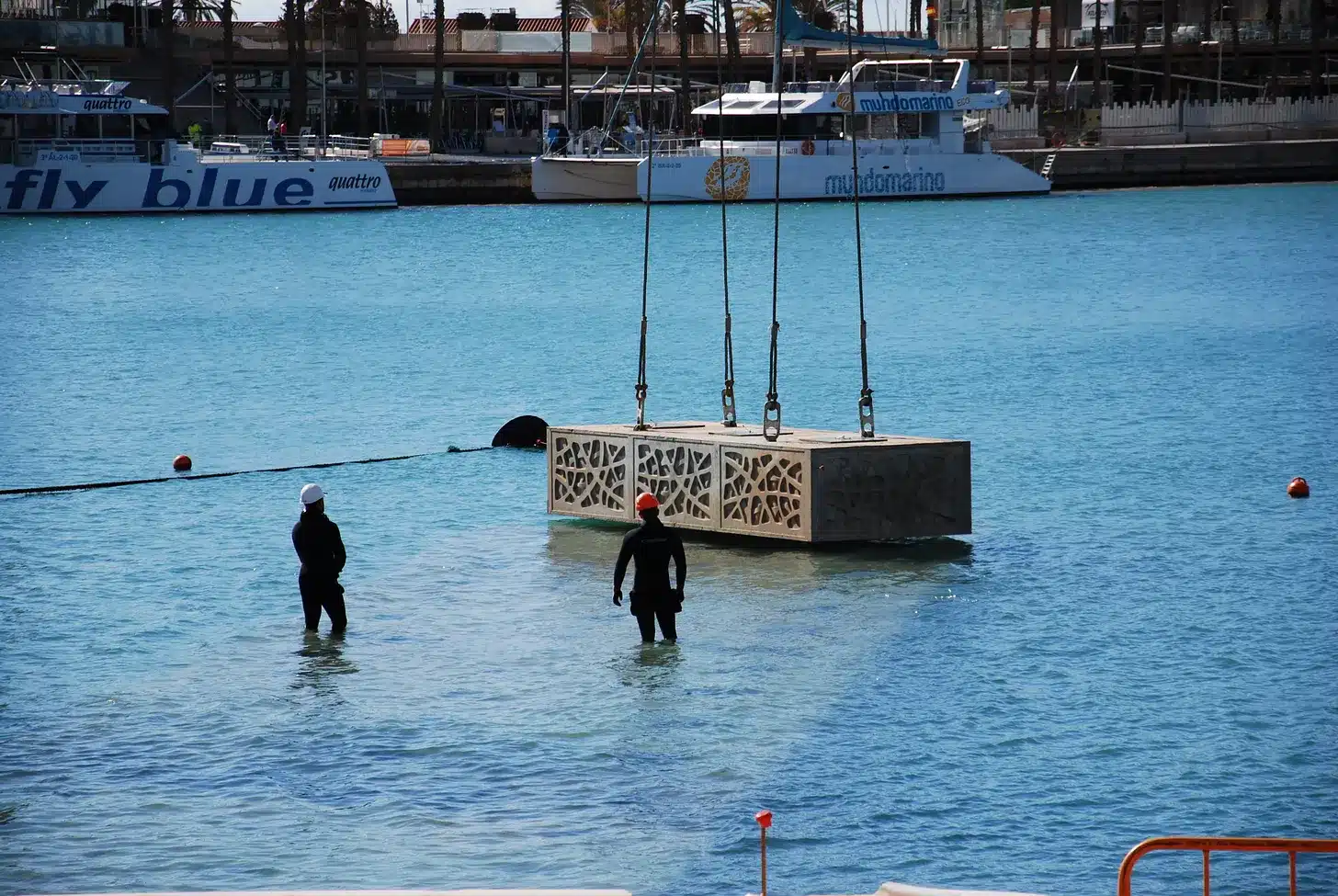
That curiosity eventually became ECOncrete, a company that has now deployed engineered marine infrastructure globally. Over the past 18 months alone, ECOncrete has delivered its bio-enhancing technology in more than 20 marine infrastructure projects, creating over 90,000m² of valuable habitat. It is a proof of concept for something the construction industry has long ignored: the world’s most-used building material doesn’t have to be a biological dead zone.
And nature returns the favor: by engineering concrete to welcome marine life—adjusting its chemical makeup and adding intentional texture—the structure achieves greater strength. When oysters and barnacles colonize the surface, they create a “living armor” through a process called biocalcification. This biological layer protects the concrete from the very erosion and weathering that usually destroy it.
The 21st century will require a massive amount of building. As sea levels rise and cities expand, the construction industry is projected to pour more concrete in the next twenty years than it did in the last hundred. The question is no longer whether we build. The question is whether we build in a way that compounds harm or compounds ecosystem health.
Open Road’s Impact
By integrating seamlessly into a robust capital stack, Open Road’s recent strategic intervention served as a vital, time-sensitive climate facility designed to maintain momentum while long-term mission investors aligned. The science was already done, the markets had already validated the model, and fifty coastlines across thirty countries were already demonstrating the results; what was required was a targeted, catalytic stabilization mechanism to ensure continuity between proven ecological impact and permanent financing.
Read the full story on Open Road’s Substack, Thoughts from the Road: https://openroadimpact.substack.com/p/the-scientist-who-looked-at-concrete